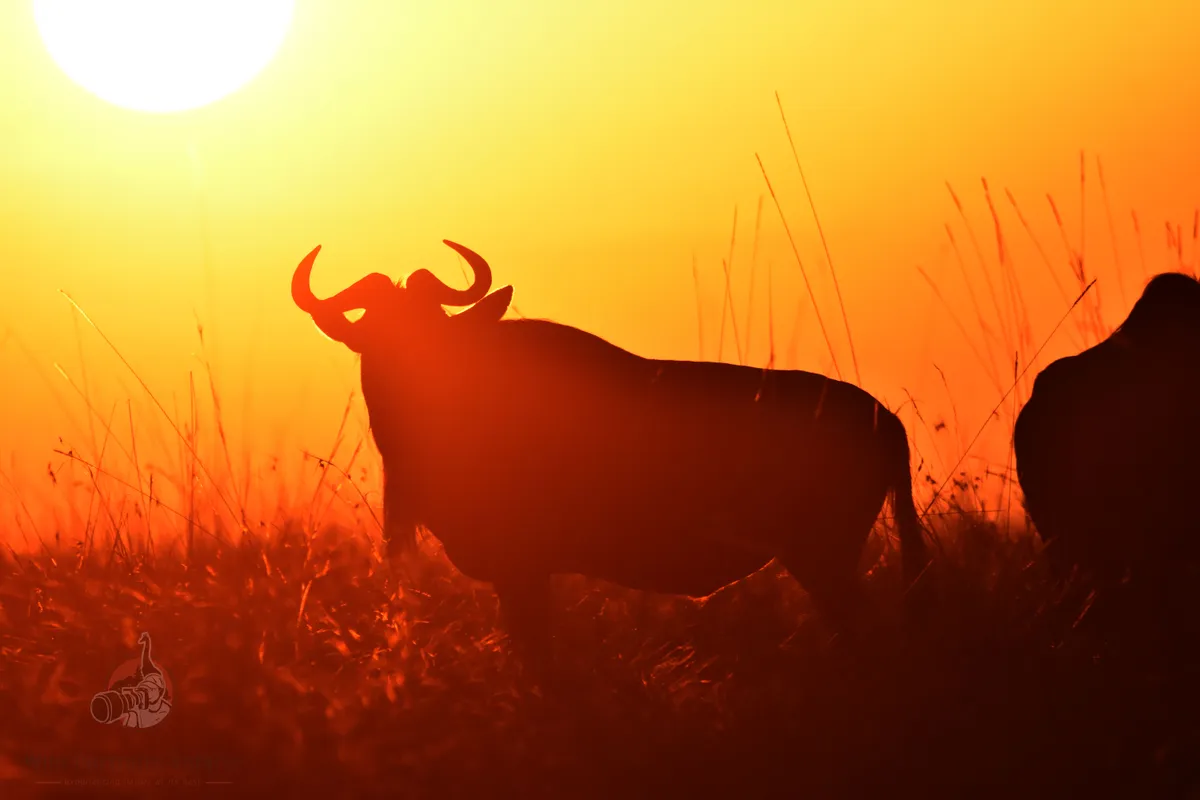
Masai Mara & Serengeti Great Migration 2027: A Complete Safari Guide
Follow the Great Migration beyond a single river crossing. Journey from Kenya’s Masai Mara into Tanzania’s Northern Serengeti on a privately guided 10-day safari designed around wildlife, patience and time in the field. Discover the best time to travel in 2027, where the herds may be, what to expect at the Mara River, and why experiencing both sides of the Serengeti–Mara ecosystem can transform your migration safari.
Masai Mara & Serengeti Great Migration 2027: What We’ve Learned From Guiding Migration Safaris
A large gathering of wildebeest beside the Mara River can change the atmosphere of a safari very quickly.
Vehicles begin positioning. The herd becomes restless. A few animals approach the bank. Dust starts rising behind them.
It looks as though a crossing is about to happen.
Then the wildebeest turn around.
They may return an hour later. They may move several kilometres along the river. They may cross somewhere completely different—or disappear back onto the plains.
This is one of the first things we want travellers to understand when planning a Masai Mara and Serengeti Great Migration Safari in 2027:
The migration does not follow our itinerary. We have to follow the migration.
That difference influences how we plan the route, how much time we spend in each area and, most importantly, how we guide once the safari begins.
The famous Mara River crossings are spectacular when you are fortunate enough to witness one, but they are only one part of a much bigger wildlife story.
The wildebeest moving through Tanzania's Serengeti and Kenya's Masai Mara are part of the same migration. Rainfall, fresh grazing and water influence their movements through an ecosystem that extends across both countries.
For travellers with enough time, our preference is therefore simple:
Don't make the Masai Mara and Serengeti compete. Experience both.
For our 2027 northern migration safaris, we favour a route that spends three nights in the Masai Mara, three nights in Northern Serengeti, two nights in Central Serengeti and one night at Ngorongoro before finishing in Arusha.
Here is why.
First, Understand What the Great Migration Really Is
The Great Migration is often marketed through one image: wildebeest plunging into a crocodile-filled river.
That image is real.
But it can also give first-time safari travellers the wrong impression of what a migration safari actually involves.
The migration is a continuous movement of wildebeest accompanied by zebra and other grazing animals through the greater Serengeti–Mara ecosystem.
Their movement is influenced largely by rainfall, water and grazing conditions.
This means the question:
“Where will the migration be on August 15, 2027?”
doesn't have an honest, precise answer.
Historical patterns help us decide where to base a safari during different months. They are extremely useful for planning.
Once you are on safari, however, current conditions matter more than a migration map printed months earlier.
This is where good guiding becomes important.
What We Look at Once You Are in the Field
Knowing the historical migration pattern is only the starting point.
Once a safari begins, we want to understand what is happening now.
Where are significant concentrations of wildebeest being reported?
Are herds moving or settled?
What are grazing conditions like?
Has recent rain changed wildlife distribution?
Are animals beginning to concentrate near the river?
Where has predator activity been particularly interesting?
What happened yesterday—and is there any reason to believe the same conditions will continue today?
A guide should be continually building a picture from direct observation and reliable information from the field.
And sometimes that means changing the plan.
If an area we expected to be productive is quiet while wildlife activity has shifted elsewhere, there is little value in stubbornly following the original plan simply because it appears on an itinerary.
The itinerary gets you into the right ecosystem.
The guide determines how you experience it.
That is an important distinction.
July to October 2027: Why We Favour the Northern Migration Route
For travellers wanting to combine the Masai Mara and Northern Serengeti, the July-to-October period has historically been the key season to consider.
This is when the migration is generally associated with the northern Serengeti–Mara ecosystem and the Mara River.
But even within this period, conditions vary.
You might find large herds well spread across the plains.
At another time, animals may be concentrated in particular areas.
Some herds may be in Kenya while others remain in Tanzania.
Wildebeest can also cross and later cross again.
This is another reason we don't particularly like describing the migration as though the animals simply march from Tanzania into Kenya in a neat straight line.
They don't.
Their movements can be messy, unpredictable and fascinating.
And that is exactly what makes being there so interesting.
What We Have Learned About Mara River Crossings
If witnessing a Mara River crossing is high on your safari wish list, tell us.
It helps us understand your priorities.
But we will also tell you something that may be less exciting to hear:
We cannot promise you one.
Nobody can.
A guide may find thousands of wildebeest gathering near the river and have good reason to believe conditions look promising.
Then the animals stop.
One wildebeest approaches the bank.
The herd follows.
They become restless.
And suddenly something changes.
They turn around.
This is why experienced migration guiding requires patience.
It also requires judgement.
Sitting beside an inactive section of river for an entire day isn't automatically good guiding simply because a crossing might happen.
There may be exceptional wildlife activity elsewhere.
The challenge is knowing when patience is justified and when it is time to explore.
That decision is part experience, part observation and part accepting that wildlife will always retain the final say.
A River Crossing Should Not Decide Whether Your Safari Was Successful
This is something we feel strongly about.
Of course, a river crossing can be extraordinary.
The noise, dust, hesitation of the herd, movement through the water and sheer number of animals can create a wildlife scene you never forget.
But imagine spending ten days in Kenya and Tanzania and deciding the safari was unsuccessful because wildebeest didn't enter the river while your vehicle happened to be there.
You may have watched lions interacting with their cubs.
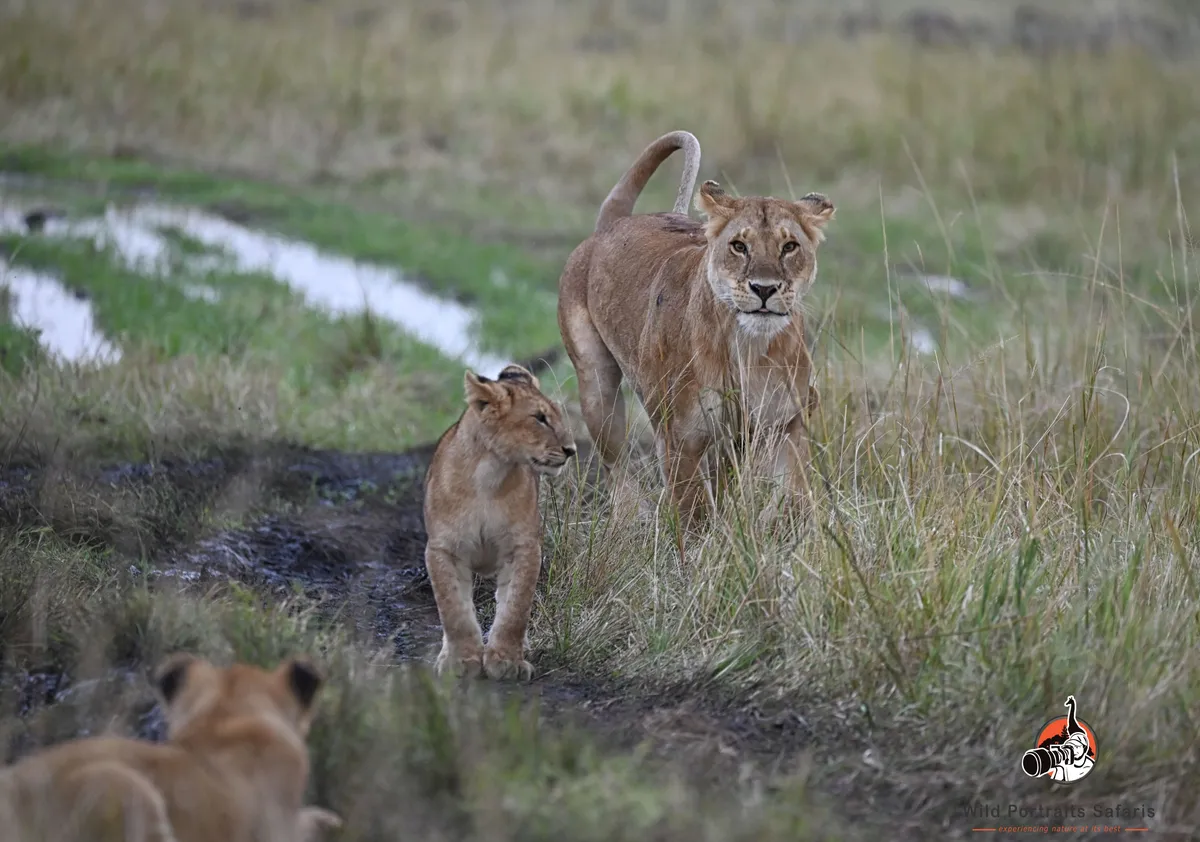 Seen a cheetah hunt.
Spent an hour alone with elephants.
Photographed wildebeest moving through dust at sunset.
Watched hyenas interacting around the herds.
Found a leopard resting in a tree.
Experienced thousands of animals moving across an open plain.
Those experiences are not consolation prizes.
They are the safari.
Our job is therefore to create opportunities around the migration without allowing one unpredictable event to dominate the entire journey.
Why We Spend Three Nights in the Masai Mara
Three nights gives us something we value enormously on safari:
time.
A one-night stop often creates pressure.
You arrive.
You have one afternoon.
Perhaps one full day.
Then you leave.
Wildlife doesn't know that tomorrow is your checkout date.
With three nights in the Masai Mara during the Great Migration, we have multiple opportunities to explore.
One day might concentrate on areas where migration activity is developing.
Another morning may begin with lions.
Information from the previous evening might send us in a completely different direction the following day.
And if something special develops, a private safari gives us more freedom to stay with it.
We would rather have fewer destinations experienced properly than more destinations experienced through a vehicle windscreen while rushing toward the next lodge.
Why Cross Into Northern Serengeti?
After three nights in the Mara, we continue into Tanzania for another three nights in Northern Serengeti.
There is a simple ecological reason for this:
It is the same migration.
The international border separates Kenya and Tanzania administratively, but it doesn't separate the ecosystem.
Herds may be spread across different parts of the northern migration range.
Some may be around the Mara.
Others may remain in Northern Serengeti.
Their distribution changes.
Experiencing both areas therefore gives you two perspectives on the northern migration rather than betting the entire safari on one location.
Northern Serengeti also deserves time in its own right.
The region isn't merely somewhere to wait for wildebeest to cross water.
There are lions, elephants, giraffes, cheetahs, leopards, hyenas and numerous plains species throughout the wider landscape.
Some of our favourite migration moments can happen far away from the river.
Why Three Nights in Northern Serengeti?
For exactly the same reason we give the Mara three nights.
Time creates options.
Suppose your first afternoon in Northern Serengeti is relatively quiet.
That's fine.
We still have tomorrow.
And the following day.
Conditions can change remarkably quickly.
Wildlife can move overnight.
Information changes.
Weather changes.
Predators become active.
Herds shift.
Having two full days between arrival and departure gives the guide room to work with those changes.
It also allows us to resist one of the worst habits on safari:
rushing from sighting to sighting because we feel we must see everything today.
Sometimes the Best Decision Is Not to Follow the Crowd
Migration season can be busy, particularly around major wildlife events.
When vehicles begin concentrating in one area, it is natural to assume that is where you should go.
Sometimes it is.
Sometimes it isn't.
A cluster of vehicles may indicate something extraordinary.
It can als